Translate This Page

Wednesday, December 16, 2020


marking with point of Schaghticoke peninsula land mass... considering fertility energy of this site with land masculine and Water feminine... another energetic are pools and rapids... balance point with polarities...
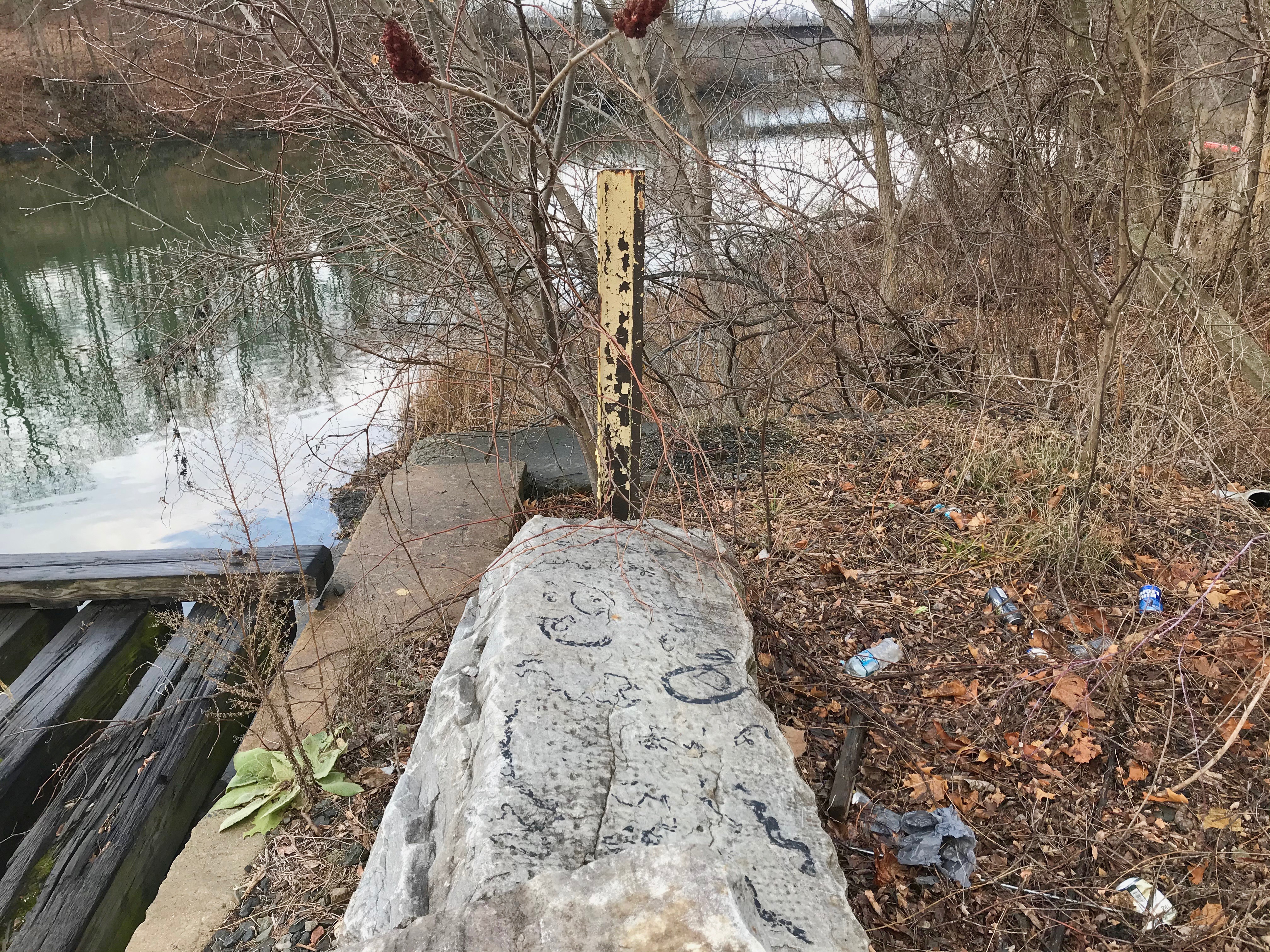


local circle Fire charcoal with stone, Water and Earth...

Hoosic River 

Schaghticoke NY


∆    ∆    ∆


focal

place

unifies


“Schaghticoke /ˈskætɪkoʊk/ SKAT-i-kohk is a town in Rensselaer County, New York, United States. The population was 7,679 at the 2010 census.[3] It was named for the Schaghticoke, a Native American tribe formed in the seventeenth century from an amalgamation of remnant peoples of eastern New York and New England. The tribe has one of the oldest reservations in the United States, located in what is now Litchfield County, Connecticut. It has been recognized by the state of Connecticut but has not yet achieved federal recognition. …”

area was historically occupied by the Mohican tribe, and later by a mixed group of Mohicans, and remnants of numerous New England tribes who had migrated west seeking to escape European encroachment.

In 1675, Governor Andros, governor of the colony of New York, planted a tree of Welfare near the junction of the Hoosic River and Tomhannock Creek, an area already known as Schaghticoke, "the place where the waters mingle." This tree symbolized the friendship between the English and the Dutch, and the Schaghticoke Indians. The Native Inhabitants were Mohican refugees from New England welcomed to Schaghticoke because they agreed to help protect the English from the French and the Iroquois. They stayed until 1754.

Prior to the proclamation of colonial independence, Schaghticoke was part of the colony of New York with most of its citizens governed by the city of Albany, which owned the land they rented.

Originally, Schaghticoke was a dangerous place to live because they were frequently raided by the Indians and Tories. This led to the slow settlement of the Schaghticoke land. Once the land was fully settled it was a part of Albany County, until 1791 when Rensselaer County was formed.

After the revolution many immigrants came from England and Ireland to settle in Schaghticoke. The town flourished near the water powered mills created in the town on the Hoosic River. The town was mainly agricultural. There were many farmers residing in Schaghticoke who made crops for local industries.

The Knickerbocker Mansion was listed on the National Register of Historic Places in 1972.[4]

As of the early decades of the 21st century, Schaghticoke still has a strong agricultural presence but is also characterized by increasing residential development, and contends with related political, social, and economic issues.”…

- https://en.wikipedia.org/wiki/Schaghticoke_(town),_New_York


5 Years After Hoosick Falls Water Crisis, Millions of NYers Still Don’t Know What’s in Their Drinking Water

For Immediate Release: December 8, 2020

Legislators Pledge Action if Dept. of Health Fails to Test for Unregulated Contaminants 

Albany – Five years have passed since the US EPA informed residents of Hoosick Falls, NY that their water was unsafe to drink because of toxic PFOA contamination. Yet in that time, the NYS Department of Health (DOH) has failed to implement a landmark law that was intended to prevent future situations like Hoosick Falls from happening by expanding drinking water testing for unregulated contaminants to millions of New Yorkers.

Should the Department fail to act, Senator James Skoufis and Assembly Member Richard Gottfried have committed to passing their bill (S.6625/A.7839) to jump start testing for unregulated contaminants during the upcoming legislative session.

For years, Hoosick Falls residents were in the dark about the cancer-causing chemical in their drinking water. Because the Hoosick Falls water system serves fewer than 10,000 people, the village was not required to test for a suite of unregulated contaminants, which included PFOA, in 2013. Had testing been required, Hoosick Falls residents would have been alerted to and protected from PFOA much earlier.

In response, Governor Cuomo’s administration promised swift action to close the testing loophole. In 2017, the Governor signed the Emerging Contaminant Monitoring Act, which directs DOH to create and regularly update a list of unregulated contaminants that every water system, regardless of size, would be required to test for and notify the public if high levels were discovered. However, DOH has failed to follow through. Approximately 2,000 small water systems have not been tested for unregulated contaminants like strontium, chromium-6, or vanadium. 2.5 million New Yorkers still don’t know if there are chemicals in their water that could make them sick. ..."... - https://eany.org/press_release/5-years-after-hoosick-falls-water-crisis-millions-of-nyers-still-dont-know-whats-in-their-drinking-water/


Elements are Life

Love, Peace & CoCreativity...


Tuesday, December 15, 2020


arriving with double Ω


local circle Fire charcoal with stone, Water and Earth...

Hoosic River 

Johnsonville NY


∆    ∆    ∆


 hovering

 wave

flows


 "Earth, Air & WaterWorks, Inc. is the proud sponsor of "The Pittstown/Johnsonville Hoosic River Project", a rural grassroots organization dedicated to preserving their rural heritage in "harmony with nature."  One way they propose to do this is by addressing some long-ignored environmental issues in the area, particularly along the banks of Hoosic River by the Johnsonville Hydroelectric dam. The goal is to establish a "forever" green & blue senic way along the river where it winds through the tiny Hamlet of Johnsonville, NY. Local residents are just beginning to realize how very under-appreciated the river is by elected officials in that area. There are absolutely NO protections for this important river there: The Hoosic River is THE LARGEST estuary of the Historic Hudson River."

https://web.archive.org/web/20100325063533/http://www.freewebs.com/erthma/


5 Years After Hoosick Falls Water Crisis, Millions of NYers Still Don’t Know What’s in Their Drinking Water

For Immediate Release: December 8, 2020

Legislators Pledge Action if Dept. of Health Fails to Test for Unregulated Contaminants 

Albany – Five years have passed since the US EPA informed residents of Hoosick Falls, NY that their water was unsafe to drink because of toxic PFOA contamination. Yet in that time, the NYS Department of Health (DOH) has failed to implement a landmark law that was intended to prevent future situations like Hoosick Falls from happening by expanding drinking water testing for unregulated contaminants to millions of New Yorkers.

Should the Department fail to act, Senator James Skoufis and Assembly Member Richard Gottfried have committed to passing their bill (S.6625/A.7839) to jump start testing for unregulated contaminants during the upcoming legislative session.

For years, Hoosick Falls residents were in the dark about the cancer-causing chemical in their drinking water. Because the Hoosick Falls water system serves fewer than 10,000 people, the village was not required to test for a suite of unregulated contaminants, which included PFOA, in 2013. Had testing been required, Hoosick Falls residents would have been alerted to and protected from PFOA much earlier.

In response, Governor Cuomo’s administration promised swift action to close the testing loophole. In 2017, the Governor signed the Emerging Contaminant Monitoring Act, which directs DOH to create and regularly update a list of unregulated contaminants that every water system, regardless of size, would be required to test for and notify the public if high levels were discovered. However, DOH has failed to follow through. Approximately 2,000 small water systems have not been tested for unregulated contaminants like strontium, chromium-6, or vanadium. 2.5 million New Yorkers still don’t know if there are chemicals in their water that could make them sick. ..."... - https://eany.org/press_release/5-years-after-hoosick-falls-water-crisis-millions-of-nyers-still-dont-know-whats-in-their-drinking-water/


Elements are Life

Love, Peace & CoCreativity...


Monday, December 14, 2020


a little google glitch this morning...


second map showing arcing wave series with Hoosic' North most course... 


local circle Fire charcoal with stone, Water and Earth...

Hoosic River 

Eagle Bridge NY


∆    ∆    ∆


morals

values

overtones


The community was named after the eagle for patriotic reasons.[4] The hamlet was served by the Rutland and Washington Railroad.

American painter Grandma Moses was a long-time resident of Eagle Bridge.[5]

- https://en.wikipedia.org/wiki/Eagle_Bridge,_New_York


5 Years After Hoosick Falls Water Crisis, Millions of NYers Still Don’t Know What’s in Their Drinking Water

For Immediate Release: December 8, 2020

Legislators Pledge Action if Dept. of Health Fails to Test for Unregulated Contaminants 

Albany – Five years have passed since the US EPA informed residents of Hoosick Falls, NY that their water was unsafe to drink because of toxic PFOA contamination. Yet in that time, the NYS Department of Health (DOH) has failed to implement a landmark law that was intended to prevent future situations like Hoosick Falls from happening by expanding drinking water testing for unregulated contaminants to millions of New Yorkers.

Should the Department fail to act, Senator James Skoufis and Assembly Member Richard Gottfried have committed to passing their bill (S.6625/A.7839) to jump start testing for unregulated contaminants during the upcoming legislative session.

For years, Hoosick Falls residents were in the dark about the cancer-causing chemical in their drinking water. Because the Hoosick Falls water system serves fewer than 10,000 people, the village was not required to test for a suite of unregulated contaminants, which included PFOA, in 2013. Had testing been required, Hoosick Falls residents would have been alerted to and protected from PFOA much earlier.

In response, Governor Cuomo’s administration promised swift action to close the testing loophole. In 2017, the Governor signed the Emerging Contaminant Monitoring Act, which directs DOH to create and regularly update a list of unregulated contaminants that every water system, regardless of size, would be required to test for and notify the public if high levels were discovered. However, DOH has failed to follow through. Approximately 2,000 small water systems have not been tested for unregulated contaminants like strontium, chromium-6, or vanadium. 2.5 million New Yorkers still don’t know if there are chemicals in their water that could make them sick. ..."... - https://eany.org/press_release/5-years-after-hoosick-falls-water-crisis-millions-of-nyers-still-dont-know-whats-in-their-drinking-water/


Elements are Life

Love, Peace & CoCreativity...


Sunday, December 13, 2020


local circle Fire charcoal with stone, Water and Earth...

Hoosic River 

Hoosick Falls NY


 ∆    ∆    ∆


 releasing

routine

boundaries


Plastics Industry[edit]

A local company, Dodge Fibers Corporation, started producing Teflon-based products in 1955. This business was quite successful and later sold to larger companies. However, the industry generated chemical pollution, especially PFOA. Concern developed locally in 2014, and in December, 2015, the city advised residents to use bottled water provided for free by Saint-Gobain, the current owner of the plastics facilities.[8]"... 

- https://en.wikipedia.org/wiki/Hoosick_Falls,_New_York


5 Years After Hoosick Falls Water Crisis, Millions of NYers Still Don’t Know What’s in Their Drinking Water

For Immediate Release: December 8, 2020

Legislators Pledge Action if Dept. of Health Fails to Test for Unregulated Contaminants 

Albany – Five years have passed since the US EPA informed residents of Hoosick Falls, NY that their water was unsafe to drink because of toxic PFOA contamination. Yet in that time, the NYS Department of Health (DOH) has failed to implement a landmark law that was intended to prevent future situations like Hoosick Falls from happening by expanding drinking water testing for unregulated contaminants to millions of New Yorkers.

Should the Department fail to act, Senator James Skoufis and Assembly Member Richard Gottfried have committed to passing their bill (S.6625/A.7839) to jump start testing for unregulated contaminants during the upcoming legislative session.

For years, Hoosick Falls residents were in the dark about the cancer-causing chemical in their drinking water. Because the Hoosick Falls water system serves fewer than 10,000 people, the village was not required to test for a suite of unregulated contaminants, which included PFOA, in 2013. Had testing been required, Hoosick Falls residents would have been alerted to and protected from PFOA much earlier.

In response, Governor Cuomo’s administration promised swift action to close the testing loophole. In 2017, the Governor signed the Emerging Contaminant Monitoring Act, which directs DOH to create and regularly update a list of unregulated contaminants that every water system, regardless of size, would be required to test for and notify the public if high levels were discovered. However, DOH has failed to follow through. Approximately 2,000 small water systems have not been tested for unregulated contaminants like strontium, chromium-6, or vanadium. 2.5 million New Yorkers still don’t know if there are chemicals in their water that could make them sick. ..."... - https://eany.org/press_release/5-years-after-hoosick-falls-water-crisis-millions-of-nyers-still-dont-know-whats-in-their-drinking-water/

~ ~ ~

Elements are Life

Love, Peace & CoCreativity...


Saturday, December 12, 2020


local circle Fire charcoal with stone, Water and Earth

Hoosic River

Hoosick Falls NY


"good ol swimmin' hole" rope swing is South, upstream of Hoosick Falls...

levels of contaminants here that have traveled down stream from EPA contaminant sites upstream?...

there is visual analogy with this swimming hole rope swing and lynching for social control...

this was safe farm land...

who profits with using these deadly, toxic chemicals?...


∆  ∆  ∆


bringing

light

to darkness


5 Years After Hoosick Falls Water Crisis, Millions of NYers Still Don’t Know What’s in Their Drinking Water

For Immediate Release: December 8, 2020

Legislators Pledge Action if Dept. of Health Fails to Test for Unregulated Contaminants 

Albany – Five years have passed since the US EPA informed residents of Hoosick Falls, NY that their water was unsafe to drink because of toxic PFOA contamination. Yet in that time, the NYS Department of Health (DOH) has failed to implement a landmark law that was intended to prevent future situations like Hoosick Falls from happening by expanding drinking water testing for unregulated contaminants to millions of New Yorkers.

Should the Department fail to act, Senator James Skoufis and Assembly Member Richard Gottfried have committed to passing their bill (S.6625/A.7839) to jump start testing for unregulated contaminants during the upcoming legislative session.

For years, Hoosick Falls residents were in the dark about the cancer-causing chemical in their drinking water. Because the Hoosick Falls water system serves fewer than 10,000 people, the village was not required to test for a suite of unregulated contaminants, which included PFOA, in 2013. Had testing been required, Hoosick Falls residents would have been alerted to and protected from PFOA much earlier.

In response, Governor Cuomo’s administration promised swift action to close the testing loophole. In 2017, the Governor signed the Emerging Contaminant Monitoring Act, which directs DOH to create and regularly update a list of unregulated contaminants that every water system, regardless of size, would be required to test for and notify the public if high levels were discovered. However, DOH has failed to follow through. Approximately 2,000 small water systems have not been tested for unregulated contaminants like strontium, chromium-6, or vanadium. 2.5 million New Yorkers still don’t know if there are chemicals in their water that could make them sick. ..."... - https://eany.org/press_release/5-years-after-hoosick-falls-water-crisis-millions-of-nyers-still-dont-know-whats-in-their-drinking-water/

~ ~ ~

Elements are Life

Love, Peace & CoCreativity...


Friday, December 11, 2020


local circle Fire charcoal with stone, Water and Earth...
Hoosic River
Green Mountain National Forest
North Pownal VT

∆ ∆ ∆

moving

with

power


"...Both cotton mills and woolen mills operated during the 19th century. The wool industry reached its peak between 1820 and 1840, though farmers continued to raise sheep until the 20th century.[4] On the Hoosic River in North Pownal, an 18th-century gristmill was replaced by a woolen mill that operated from 1849 until 1863, when it burned. The Plunkett & Barber Co. Mill, built in 1866, served as a cotton mill until 1930, becoming a tannery in 1937. It closed in 1988. Remediated as a Superfund site, the mill site is planned to become a recreation area.

During the early part of the 20th century, Lewis Hine documented child labor in the mills. His photograph of twelve-year-old Addie Card, entitled "Anemic Little Spinner in North Pownal Cotton Mill, North Pownal, Vermont, August 1910", was featured on the U.S. stamp[10] commemorating the passage of the first child labor laws (see the Keating–Owen Act). Elizabeth Winthrop has written a novel, Counting on Grace,[11] inspired by Addie's photograph and life."... - https://en.wikipedia.org/wiki/Pownal,_Vermont


"...Rebuilt in the 1950s, the Pownal dam powered the Pownal Tannery (although various structures have been there since the original mill in the 1880s). The Pownal Tannery went bankrupt in 1988 and the town reluctantly took control of the hydro facility. Many developers have looked at developing the site but environmental contamination in the form of polychlorinated biphenyls or PCBs in the sediment behind the dam made the project unfeasible even with Environmental Protection Agency brownfield grants.


The Pownal project is the second dam renovation Scully has undertaken. The first was the Vermont Tissue Dam in North Bennington. That dam went online in 2015 and has a capacity of 360kW. Redeveloping the Tissue Dam required the removal of PCBs, dioxin and lead in the sediment that had accumulated behind the dam as well as a new license. Scully credits that more complicated experience as important to helping him renovate the Pownal Dam which also required the removal of PCBs and an amended exemption from licensing...."... - https://www.vtenergydashboard.org/stories/hydropower-at-historic-pownal-dam


Elements are Life

Love, Peace & CoCreativity...


Thursday, December 10, 2020


local circle Fire charcoal with stone, Water and Earth...
Hoosic River
Green Mountain National Forest
Pownal VT


∆  ∆  ∆

with

passions

comfortably


"During the Woodland period, the area was settled by the Mahican people, with others, such as the Mohawks, traveling across it. By the late 17th century, Europeans may have entered the area as a result of the establishment of the Dutch patroonship owned by Kiliaen van Rensselaer, the Manor of Rensselaerswyck, which extended west and east out of Albany and the fur trading community of Beverwyck. The southwestern corner of Pownal was part of the patroonship.[citation needed] Rensselaerswyck passed into English control in 1664. The first European settlers may have entered the area in the 1730s.[4] Those settlers may have been Dutch or other Europeans who leased land within Rensselaerwyck."...


"...settlers, primarily of English descent, began to arrive from Massachusetts, Connecticut and Rhode Island. In 1766, 185 male heads of households in Pownal sent a petition to George III, asking that their land claims be recognized and that the fees required to do so be waived. Since Wentworth had granted to settlers land that the Province of New York also claimed, legal and physical conflicts broke out between "Yorkers" and settlers in the New Hampshire Grants (or "The Grants"). As a result, a number of Pownal residents joined the Green Mountain Boysunder Ethan Allen.

By the American Revolution, the town was deeply divided between "Yankees" and the Tories, those sympathetic to England, each of whom considered himself or herself a Loyalist. Tories were often arrested and imprisoned.

These tensions were strong enough that when British General John Burgoyne's Saratoga campaign brought conflict to the area, Vermonters fought on both sides. William Card, originally of Rhode Island, fought for the British at the Battle of Bennington along with four of his sons: Jonathan, Elisha, Philo (or possible Peleg), and Stephen.[6] The battle, a virtually complete American victory, resulted in the capture of the elder Card and all four of his sons, but they were soon released. Three years later, William Card's grandsons Thomas and Jonathan would serve in a Vermont Patriot regiment.[7]

By the end of the Revolution, most Tories had fled Pownal for safety among the United Empire Loyalists who resettled in Canada. The novel Memoir of a Green Mountain Boy starts and ends in Pownal during the early years of the Revolution"... - https://en.wikipedia.org/wiki/Pownal,_Vermont


Elements are Life

Love, Peace & CoCreativity...