Translate This Page

Showing posts with label plant medicine in art. Show all posts

Saturday, November 16, 2013


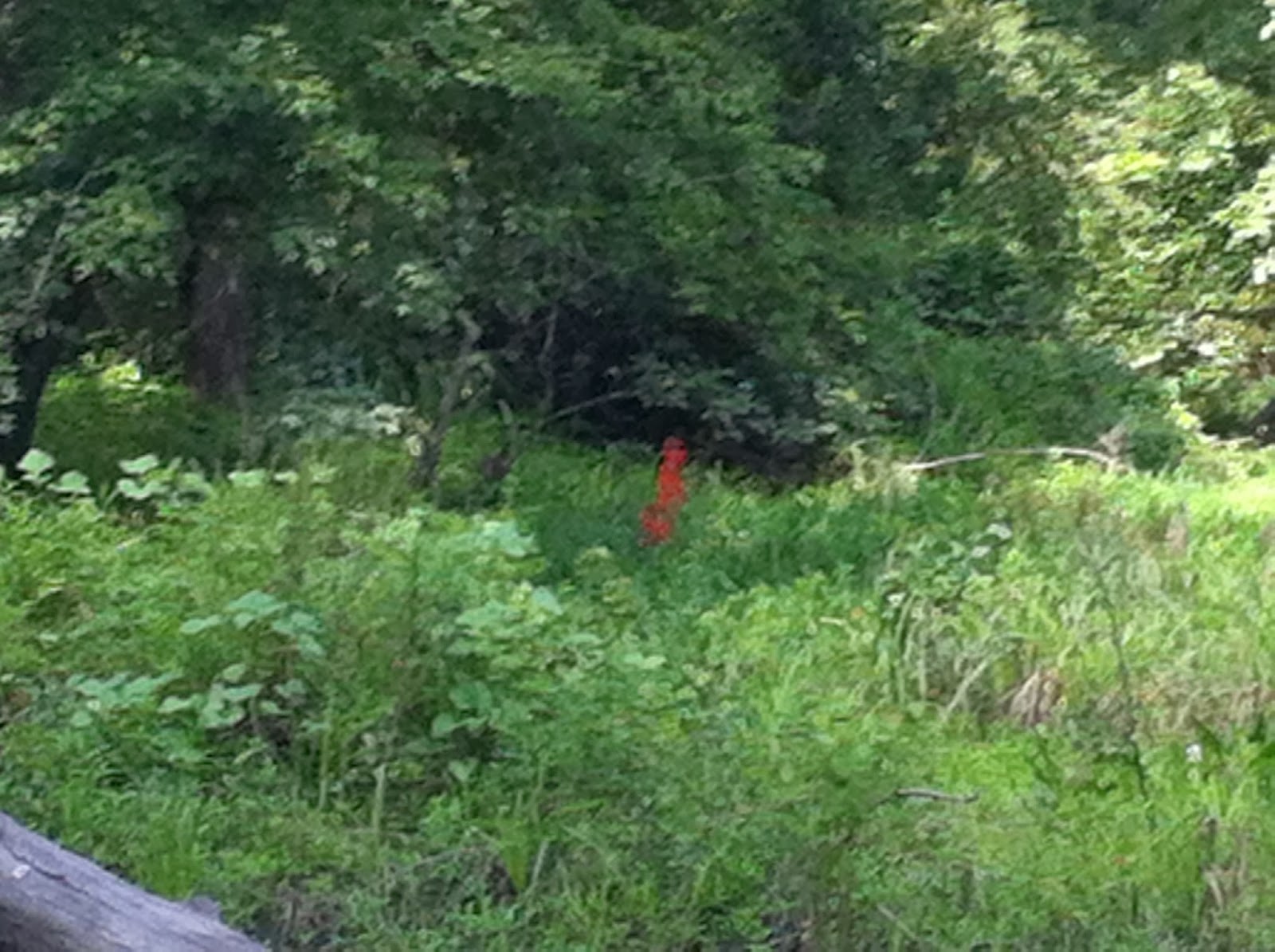
"Cardinal Flower"

am liking the pareidolia of
this painterly shot in Turners Falls, MA 

Cardinal flower is not typically in regular use in herbal medicine Lobelia inflata is. Lobelia cardinalis possesses less potency as an analgesic, antispasmodic, emetic and cartarrh with bronchial respiratory and lower digestive systems.

I took near where a camp of Native Americans...

from http://en.wikipedia.org/wiki/King_Philip's_War
"May 18, 1676, Captain William Turner of the Massachusetts Militia and a group of about 150 militia volunteers (mostly minimally trained farmers) attacked a large fishing camp of Native Americans at Peskeopscut on the Connecticut River (now called Turners Falls, Massachusetts). The colonists claimed they killed 100–200 Native Americans in retaliation for earlier Indian attacks against Deerfield and other colonist settlements and the colonial losses in the Battle of Bloody Brook. Turner and nearly 40 of the militia were killed during the return from the falls."

As it was at fishing camps just before sunrise the men were all out fishing. The camp of over 200 elders, women and children were slaughtered,was atop the cliffs that dropped down to the rapids of the river. Below the men listened to the screams.. These lands were Sacred as fishing and farming along the Connecticut. Healing intent with this photo is to send a message of recognition, understanding and consciousness into the Earth of the people...
~Love, Peace and CoCreativity~

Saturday, July 20, 2013

and with the "Curly Dock" processing;

this would make a great installation with the Dock sprouting, rooting and growing into the paper
the 6" x 6"s and the old moss/lichen picnic table...


perhaps sitting under the old apple tree.... Use your imagination and watch it grow. With time limitations and wanting to unload the press to catch the effects of the Dock root with the paper I chose to break it down. To catch up here it may help to check out this previous entry...  http://gregpatch.blogspot.com/2013/07/before-dismantling-press.html

and then with the prints I felt I wanted to place a wash of a variant color upon the prints for contrast and a softening. I used coffee w/cream (1/2 & 1/2, where cassein is derived from). Hope you enjoy these finished? pieces.

Curly Dock 1

Curly Dock 2

Curly Dock 3

Curly Dock 4


Wednesday, July 17, 2013

 "Dandelion 1"

 "Dandelion 2"

                                                    
"Dandelion 3"


3 stages of drying Dandelion leaf and root photosketched. At three separate drying stages I moved plant material to air the process, preventing mold and to prevent plant material sticking to the wood surface. Each reset becomes an art work and photographed as lightness and movement in relation to each other...

Thursday, July 11, 2013


before dismantling the press...

... the sprouting Curly Dock roots after dismantling the press.


a couple feet observing the prints before drying...


Friday, June 28, 2013


some notes;
I cleared an area of Broadleaf Dock Rumex obtusifolius for my landloard. Related to Yellow or Curly Dock Rumex crispus, it doesn't have quite the content level of berberines, and is a lighter shade of yellow. It is aptly medicinal with less intensity. 
After rinsing I strew the roots upon four Khadi papers in the rain (medium: watercolor). Then I pulverized with a granite stone and placed some rotting, moldy, mossy, wet 6" x 6"s I borrowed from the woodpile to press (grid markers). We're due for some heavy rains... the "rest" will be up to nature's enfoldment. A final lathering with whole milk goat yogurt will finish the pieces...
I've been eating rabbit this past week... pareidolia expression?

Sunday, June 9, 2013

"bamboozling (Mars in Gemini sq nSat Virgo and opp nSun/Moon Sag)"
6 Act Play Photo Sketch
view top to bottom, bottom to top. right to left, ...


Tuesday, April 2, 2013

unbroken circle 4                                17" x 12"
egg tempera w/Earth ochre pigments, beet/carrot juice on Khadi paper

Monday, April 1, 2013

unbroken circle 3                               17" x 12"
egg tempera w/Earth ochre pigments, beet/carrot juice on Khadi paper

Sunday, March 31, 2013

unbroken circle 2                                17" x 12"
egg tempera w/Earth ochre pigments, beet/carrot juice, beet, carrot on Khadi paper

Saturday, March 30, 2013

unbroken circle 1                                        17" x 12"
egg tempera w/Earth ochre pigments, beet/carrot juice on Khadi paper

four 12" x 17" Khadi papers in varying stages drying with combinations of materials; Earth ochre pigments, egg tempera, beet/carrot juice, beets & carrots, dish detergent and h2o...


Thursday, March 28, 2013


Wood Spring grid


Wood Spring grid                                     

Wood is the element of Spring in the 5 Element Philosophy. Wood empowers our birth and renewal with Spring. Wood aligns with us and we with it to emerge with our visions of Winter and with our intent with Summer. All is connected, their are no borders, walls or separation. 
our being 
within the us, 
our being
without the them,
our being
with one
....

Thursday, February 14, 2013

painting I did @1992 that I uncovered in this delve into the past along with yesterday's post that came as I was transitioning to natural materials in painting/artwork. It is on a mahogany (solid wood) panel with beeswax and natural pigments...

           the Elements          
        18" x 12 1/2"      
Beeswax/natural pigments on Mahogany panel

As we're entering the Chinese New Year of the Black (all colors) Water Snake there is an appropriateness to the unearthing of these two works @21 years later... 
May we will to adjust to the Earth/Universal oriented changing flows/currents within/out our lives/environments in productive and abundant grace and within the Loving, Peaceful and Co-Creative Way...
Many Colors Blessings...

Wednesday, February 13, 2013

Green Man           16 x 17           Beeswax/natural pigments, leaves on gessoed masonite
my rearranging the studio turned this painting up from 1992

Sunday, October 14, 2012

to all our falling warriors

Loquat falling warrior feather                                               ©Greg Patch        

Friday, October 12, 2012

Duckweed Grid

Duckweed; family Lemnaceae

Duckweed Grid                                                           ©Greg Patch

from http://en.wikipedia.org/wiki/Lemnoideae;
Classifications created prior to the approximate end of the twentieth century tend to classify them as a separate family,Lemnaceae.
Duckweed is an important high-protein food source for waterfowl and also is eaten by humans in some parts of Southeast Asia. As it contains more protein than soybeans, it is sometimes cited as a significant potential food source.[6] The tiny plants provide cover forfry of many aquatic species. The plants are used as shelter by pond water species such as bullfrogs and bluegills. They also provide shade and, although frequently confused with them, can reduce certain light-generated growths of photoautotrophic algae.
The plants can provide nitrate removal, if cropped, and the duckweeds are important in the process of bioremediation because they grow rapidly, absorbing excess mineral nutrients, particularly nitrogen and phosphates. For these reasons they are touted as water purifiers of untapped value.[7]
The Swiss Department of Water and Sanitation in Developing Countries, SANDEC, associated with the Swiss Federal Institute for Environmental Science and Technology, asserts that as well as the food and agricultural values, duckweed also may be used forwaste water treatment to capture toxins and for odor control, and, that if a mat of duckweed is maintained during harvesting for removal of the toxins captured thereby, it prevents the development of algae and controls the breeding of mosquitoes.[8] The same publication provides an extensive list of references for many duckweed-related topics.
These plants also may play a role in conservation of water because a cover of duckweed will reduce evaporation of water when compared to the rate of a similar size water body with a clear surface.

Thursday, October 11, 2012

Spanish Moss (Tillandsia usneoides)

There are many questions about this beautiful classic Southern plant...
"reformed fallen to ground Spanish Moss Tillandsia usneoides placed in green space"  ©Greg Patch
from http://www.ehow.com/list_6504160_uses-tillandsia-usneoides.html;
"Tillandsia usneoides--also called Spanish moss, long moss and graybeard--is an epiphytic plant. An epiphytic plant is one that hangs from the branches and trunks of a host plant but derives nutrients from the rain and air. It is not parasitic and requires its host for physical and mechanical support only. Tillandsia usneoides commonly grows on the bald cypress and southern live oak trees. The plant has been harvested for centuries and is used in numerous commercial applications--one of which was as stuffing for the seats of Ford Model T cars."
from http://en.wikipedia.org/wiki/Spanish_moss;
"The plant's specific name usneoides means "resembling Usnea", and it indeed closely resembles its namesake Usnea, also known as beard lichen, but in fact Spanish moss is not biologically related to either mosses or lichens. Instead, it is an angiosperm in the family Bromeliaceae (the bromeliads) that grows hanging from tree branches in full sun or partial shade. Formerly this plant has been placed in the genera Anoplophytum,Caraguata, and Renealmia.[2] Its natural range is from Virginia BeachVirginia in thesoutheastern United States to Argentina, growing wherever the climate is warm enough and has a relatively high average humidity. It has been introduced to similar locations around the world, including Hawaii and Australia."

from Herbal Therapeutics David Winston, Herbalist AHG;
Usnea Usnea babata is a symbiotic life composed of an algae and a fungus. Medicinally Usnea is a powerful antibacterial agent inhibiting gram positive bacteria (Streotococcus, Staphyloccus, Pneumococcus, Mycobacterium tuberculosis). It is also an antifungal agent (ringworm, atheletes foot,) that kills trichomonas and candida. Usnea is an antispasmodic to the lung and large intestine. It is indicated for spastic colon, strep throat, bronchitis, pleuresy, pneumonia and cystitis."
Are their similarities beyond appearance?

what uses medicinally are there for Spanish Moss? 

For starters it is rich in calcium... 
from http://en.wikipedia.org/wiki/Spanish_moss
"Spanish moss is an epiphyte which absorbs nutrients (especially calcium) and water from the air and rainfall."

and also pollutants in industrial and vehicular areas that it has absorbed. We could line our highways with Spanish Moss farms. A medicinal from it would need to be grown securely away from these high pollutant areas.

In what form does Spanish Moss return these nutrients to Earth?

Thursday, October 4, 2012

these four sketches done on my trip to the NE.
I used fresh green Black Walnut Juglans nigra husk and fresh violet red Poke Phytolacca americana berry dyes gathered from Beacon, NY & Greenfield, MA...each are medicinally different as fall cleansers in traditional herbalism. Black Walnut husk a vermifuge & anti fungal (http://gregpatch.blogspot.com/2012/09/black-walnut-juglans-nigra.html); Poke br is carefully used for arthritic or cystular growth conditions


Tuesday, September 18, 2012

Black Walnut (Juglans nigra)

green Black Walnut Juglans nigra fruit dye drawings. cutting into the green fruit
like with lino or wood cuts and pressing or rolling the whole fruit with dark walnut ink dye oozing from the cut designs on to the paper... and using various tools for design weight...
the fresh walnuts from a tree nearby; a local, and an indiginous to Beacon, NY and the NE 
deciduous tree populations/communities...


Juglans niger is used in traditional medicines and in its perfection nature gifts us with this medicine during the change from summer to fall when summer seasonal parasites and fungus are among us with heightened exuberance;

from David Winston RH (AHG),
http://www.herbalist-alchemist.com/DWinstonWhatsGoingOn_BlackWalnut.htm
"black walnuts (Juglans nigra). The nuts can be eaten and the green hulls are used to make medicine. Black walnuts have a long history of use especially topically and internally both as antifungal agents and as a vermifuge. Black walnut is traditionally used for amoebic infections such as Giardia, Blastocystis hominis, Dientamoeba fragilis, Cryptosporidium. A wide range of amoebic and amoeba-like organisms can be treated using black walnut. I prefer this herb for adults; it is a bit too strong to be used in children. And for those of you who are horse lovers do not use black walnut products with your horses because it is toxic to horses. But in humans, it is relatively non-toxic although incredibly bitter and horrible tasting. The extract of the green hulls ranks it as one of my top five worst tasting plants extracts. It can also be used topically for fungal infections such as athlete’s foot and ringworm. Be very careful with fungal infection in very sensitive areas such as the groin as it can cause irritation and swelling. Phyllis Light RH(AHG) who is a wonderful herbalist from Alabama also says that black walnut stimulates thyroid function. This is not something I've used it for, but when you have somebody who is as experienced an herbalist as she, is stating that it has that activity, I have no doubt that it does."

Monday, September 10, 2012

Spirit release with harvested Morning Glory

Spirit release with harvested Morning Glory           16" x 56"           mixed eco materials
mixed eco materials;
butcher block paper
og whole wheat flour
decomposing Wild Morning Glory Convolvulus arvensis vine and its Violet flower
Earth ochre pigments 
3 Mockingbird feathers Mimidae familae
re oxygenated water
Vermont Natural Coatings (nci) poly whey water based polyurethane (semi gloss)

and acknowledging application options with installation the above a peace full ness with feathers down and with feathers up, the lift of flight, acsension...

pareidolia...

a virtual conversational on line reply to a friend writing; "did you infuse the butcher block paper witht he Morning Glories"

I went off with this expoundation.

"The flour w/water creates the binding' foundation. The pouring of "wheat paste" and winding/tying the vine down under foldings of the paper help structurally with the piece. The vine akin to the principles of steel rebar in concrete architecture. The wet paste and paper fuse. In this and other works I often use the negative spaces of cracks, holes etc for line, form and weight in the paintings. In length this piece is similar to Frank Lloyd Wright's cantilevering in his design. The relief seen in this are up to 1" thickness. The vine in places reach up out and above the "foundation" creating another dimensional aspect is 1"+ in places. Reducing elements to keep it simple/complex. As the foundation dries and after it dries I apply the color pigments dry as powder and wet mediums, again, helping with some more of the structural component. Recently I've used the commercial water based polyurethane as a final application. More fusion to the wholeness of it with more applied in some places for line, color, shape, reflection/refraction, etc. elements. Really ""] pushing & pulling [" - Hans Hoffmann]  and yanking for the multidimensional visual effect of it. The vine laid out with flow and with chaos add to its illusional quantumness/spiritness/lifeness, etc. The vine was green and violet flowers opened when I drew them onto the paper initially. Tanned/dried, by the sea salt I added  as binder/drier to the paste, again, more structure, color, design oceaness adding to its overall whole effect. Sometimes these hands are moving rapidly, my body dancing about! Hey Jackson likes that action! :) I paint in silence and/or with music for mood, rhythem, color, etc... Great question Steven, Thank you..."